
Disclosure is off by default
Existing workspaces begin with Dash disabled, and source records are not automatically published. Owners configure sections, allowed fields, eligible statuses, ordering, labels, and former-member policy. Each record release requires:dash.discloseauthority.- Permission to read the source record.
- Reviewed member-safe text.
- An eligible, verified identity relationship.
- An enabled section and current settings revision.
What is excluded
Member responses exclude internal reasons, private notes, evidence, ticket transcripts, raw provider payloads, and other fields outside the approved contract. Restricted releases keep their original authorization requirements. Reports about a member and reports submitted by a member are independent sections and releases. Submitted in-game reports require the signed connector’s real Roblox submitter proof.Exact preview
Use Workspace settings → Member Dash to preview a specific member. Exact preview calls the same eligibility and serialization logic as the member API; it cannot bypass restricted-record or network controls.Release and withdrawal
1
Configure the section
Choose allowed fields, labels, eligible statuses, order, and former-member behavior.
2
Verify the relationship
Current OAuth ownership, first-party Cnect proof, conflicts, membership policy, and audited relationship must agree.
3
Write member-safe text
Summarize only what should be shown to the member. Do not copy internal notes automatically.
4
Preview
Inspect the exact member view before release.
5
Release or withdraw
Release creates the member-visible record. Withdrawal removes active disclosure while retaining the audit history.
Session separation
Dash, staff, and Cnect sessions are separate. A staff session does not grant Dash access, and a Cnect session does not grant staff access. Personal responses are private and non-cacheable.Guided walkthrough
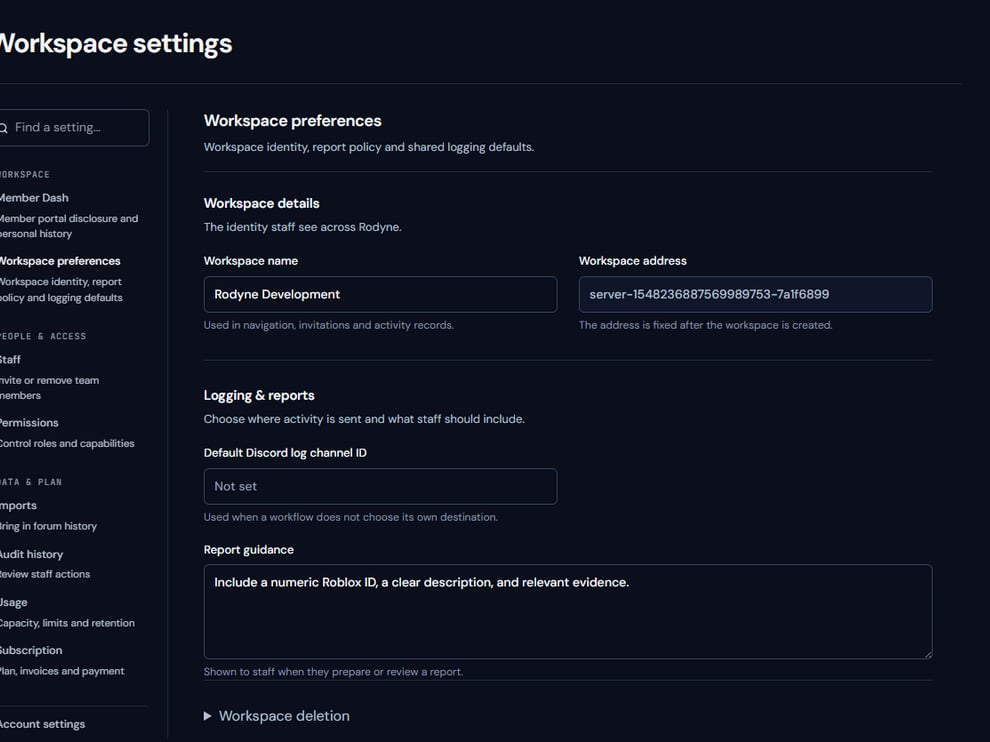
Member-facing disclosure begins with owner-controlled workspace settings and explicit releases.
Operating procedure
1
Keep disclosure disabled
Design sections and eligibility before enabling the portal.
2
Choose fields
Allow only the fields necessary for the member-facing purpose.
3
Write safe summaries
Create member-safe text independently of private notes and evidence.
4
Preview the exact member
Use the real eligibility and serializer path rather than a generic mock-up.
5
Release and review
Publish deliberately, verify in Dash, and withdraw when disclosure should end.